Contents7
A self-transfer flight means you book each leg on a separate ticket, handle your own connection, and pocket the savings — but carry all the risk yourself.
What Is a Self-Transfer Flight?
On a standard connection, one booking reference covers your whole trip. If the first flight is late, the airline rebooks you, your bags travel through automatically, and EU Regulation 261/2004 backs you up for delays of 3+ hours at arrival.
A self-transfer is two independent contracts: flight A with one airline, flight B with another. If A is late, B does not wait. "Virtual interlining" is the same idea when a platform — Kiwi.com is the best-known — stitches two tickets into one itinerary and adds its own protection layer.
Why Separate Tickets Are Cheaper
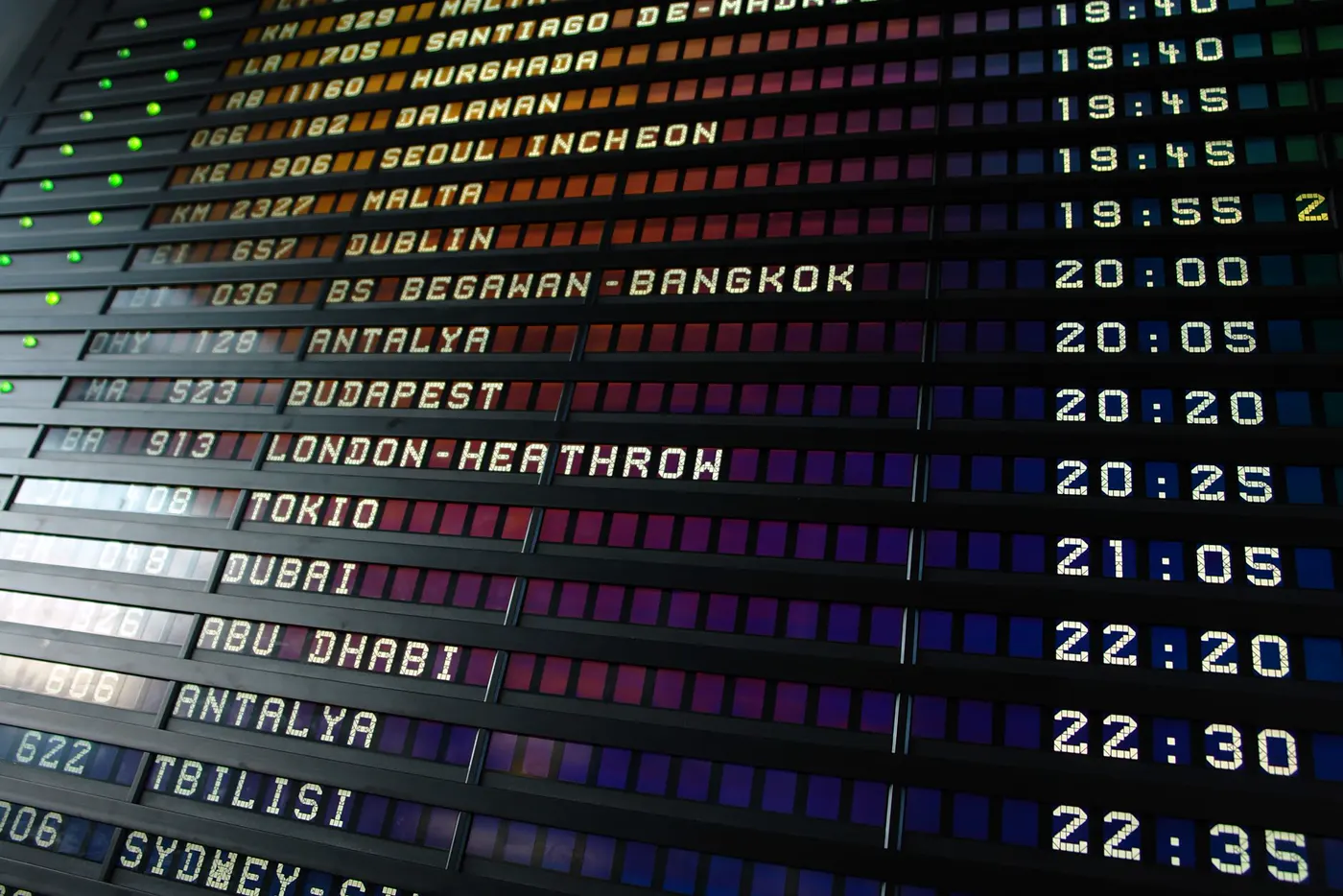
Mixing a low-cost carrier (Ryanair, easyJet, Wizz Air) with a long-haul airline opens routes no single carrier flies directly. Even where a through-ticket exists, combining fares cuts the price by 20–50% — the gap is widest on intercontinental trips with a European budget leg (HappyFares, March 2026; LayoverGuard, 2026).
- 20–50% lower fare on many routes
- Access to routes no single airline covers
- Choose the cheapest carrier for each leg
- Carry-on only: fastest self-transfer possible
- No automatic rebooking if the first flight is late
- Bags must be collected and re-checked at layover
- EU261 does not protect the missed connection
- Recovery costs can erase the savings
The savings are real. So is the risk. A realistic buffer and a protection plan keep the deal from turning expensive.
The Layover Sequence
This is what happens at every self-transfer, at every airport. Know the order and you won't waste time — or miss the check-in deadline.
- 15–15 min
Deplane and walk to arrivals
Follow signs for Arrivals or Baggage Claim. Keep your boarding pass — some airports scan it at the immigration entry point.
- 215–90 min
Passport control / immigration
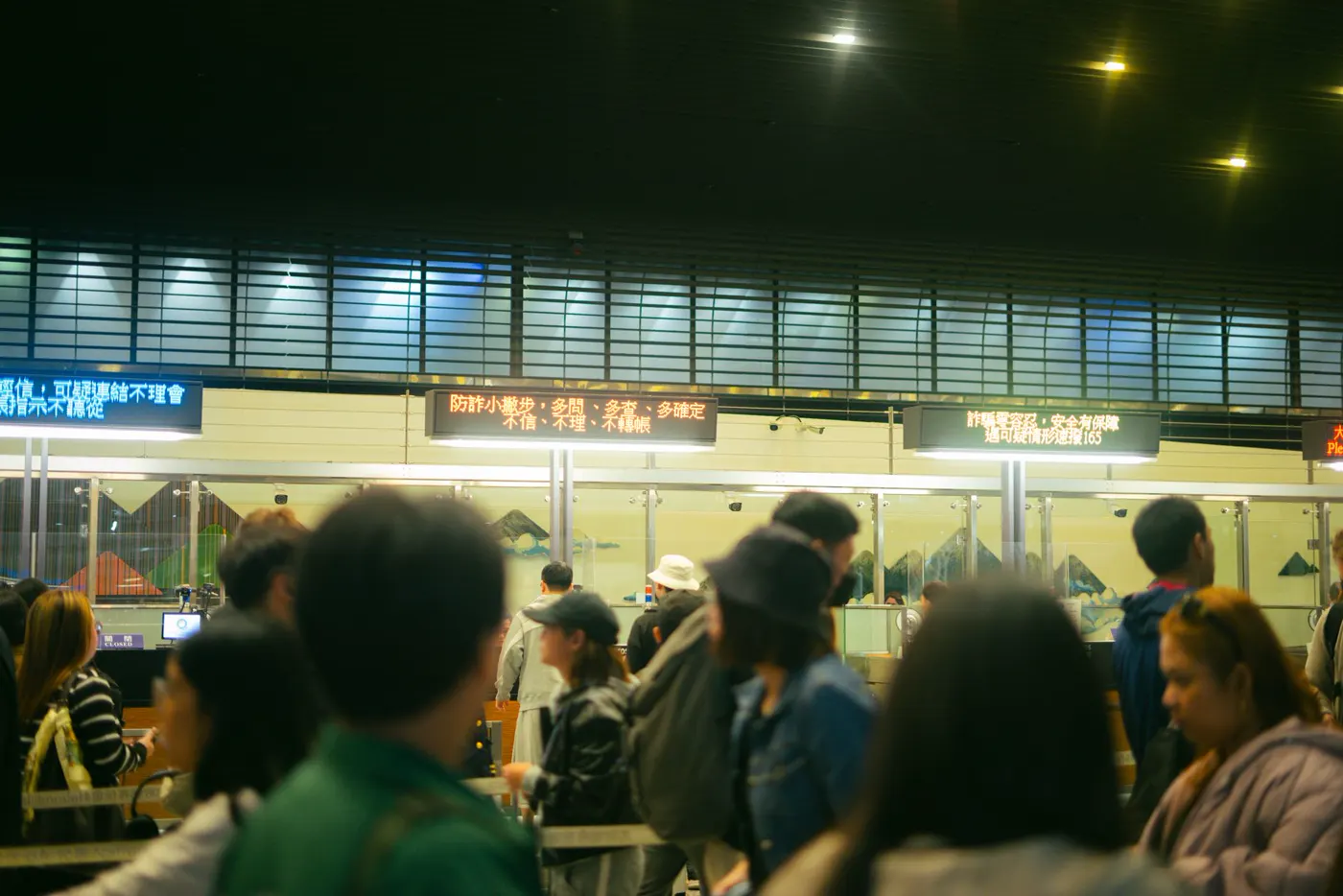
Varies hugely by airport, time of day, and passport. At busy hubs (CDG, JFK, Heathrow) allow 60–90 min at peak times.
- 320–45 min
Baggage claim
Only if you checked a bag. Carry-on only? Skip straight to the next step — this is the single biggest time-saver.
- 45–10 min
Clear customs, exit to landside
Hand in any declaration form. You are now outside the security zone — the clock for your next check-in has started.
- 510–20 min
Find check-in for flight 2
Check the second airline's app or airport screens. Counters close 30–60 min before departure for most carriers — verify on your ticket.
- 610–20 min
Check in and drop your bag
If you checked a bag, drop it here. Carry-on only: some airlines still require a document check at the desk before you go to security.
- 720–60 min
Security and departure passport control
Back through screening. Add 20–40 min if a terminal change is needed. Source: LayoverGuard, Oct 2026.
- 815–30 min
Walk to the gate
Some hubs (Heathrow T5, CDG 2E) have gates 15–20 min from the security exit. Check the airport map before you leave the queue.
How Much Time Do You Really Need?
Minimum connection times published by airlines apply to protected connections only — they do not apply on separate tickets (IATA MCT database, Nov 2026). Check conditions on the day: a 7 a.m. immigration queue looks nothing like a 1 p.m. one.
Add 30 min if you travel with young children or a passenger with reduced mobility.
Who Protects You? Almost Nobody by Default
EU Regulation 261/2004 applies per booking reference. On a single reference, a 3+ hour delay at arrival can entitle you to up to €600 and free rebooking. On separate tickets, each flight stands alone: a delay on flight A may earn EU261 compensation for that leg, but the missed connection on flight B is your problem. The 2026 reform did not change this rule. (AirHelp, 2026)
Kiwi.com Guarantee
Book through Kiwi.com and their Guarantee covers rebooking, accommodation, and meals if the connection breaks — provided you contact Kiwi immediately and don't rebook independently. Included in the Nomad fare; check current terms for coverage caps.
Travel insurance
Standard policies often exclude self-booked connections or cap payouts. Look for a policy that explicitly covers separate-ticket journeys. Insurance that covers a missed connection.
Carry-on only + big buffer
No checked bag removes the biggest time sink (45–90 min). An extra hour of buffer absorbs most typical delays. The cheapest protection is a schedule that simply works.
If You Miss It
You have landed. The second flight is closed. Do these three things in order.
- 1Step 1
Go to the airline's physical service desk
The second airline's desk — not the app. Ask about same-day standby options or the next available seat on your ticket.
- 2Step 2
Get a written delay statement
From the first airline's desk, before you leave arrivals. Your insurer or Kiwi.com will require this document.
- 3Step 3
Calculate costs before spending
Last-minute seats run $200–600 on domestic, $400–1,200+ on international routes (LayoverGuard, Oct 2026). If you booked through Kiwi, call them first — they may rebook you directly.
Who pays? On separate tickets, you do — unless you have the Kiwi Guarantee or a policy that explicitly covers missed connections. The second airline owes you nothing.
What you can still claim: EU261 compensation for the first flight, if it was 3+ hours late at arrival, the route qualifies under EU law, and the cause was within the airline's control. It won't pay for a new ticket, but it can offset part of the loss. (Your Europe)
FAQ
Do I need to collect my bag at the layover on a self-transfer?
Yes, always. On separate tickets, the first airline checks your bag to the layover airport only. You collect it at baggage claim, clear customs, and re-check it at the next airline's desk. There is no automatic bag transfer between unrelated airlines.
Does EU261 protect me if I miss my connection on separate tickets?
Not for the missed connection itself. EU261 may apply to a delay on the first flight if it qualifies independently — but the second ticket is a separate contract and receives no protection for the broken connection. (Your Europe)
Is 2 hours enough for a self-transfer?
At a small domestic airport with carry-on only and no terminal change, 2 hours is workable. At a large hub with checked bags or immigration, plan for at least 3–5 hours.
What is the Kiwi.com Guarantee exactly?
Kiwi.com's own protection for self-transfer itineraries booked on their platform. If a covered disruption causes a missed connection, Kiwi arranges and funds rebooking, a hotel, and meals — provided you notify them immediately and follow their process. Check current terms on their site for coverage caps.
Can I check in for my second flight while still on the first one?
Yes — and you should. If online check-in is available (most airlines offer it 24–48 h before departure), check in and save your boarding pass before you land. It saves time at the layover and means you can go straight to bag drop.
A self-transfer is a smart deal when the buffer is right and the protection is in place. Know both before you book.